Baptistery: Tickets and Tours

How much do tickets for the Battistero di San Giovanni of Pisa cost?
Ticket prices for the Battistero di San Giovanni vary based on whether visitors purchase entry for just the baptistery or combine it with other monuments in Piazza dei Miracoli. Combined tickets offer better value for those planning to explore multiple sites.
What types of Battistero di San Giovanni of Pisa tickets are available?
Visitors can choose from several ticket options when planning their visit to the baptistery. A single-entry ticket grants access to the Battistero di San Giovanni alone, while combination tickets include the baptistery along with other monuments like the Cathedral, Camposanto, and Museo dell'Opera del Duomo.
The most popular option is a combined ticket that includes both the baptistery and cathedral with priority entrance and an audio guide. Multi-monument passes typically range from €8 to €10 per person, depending on how many sites are included. Single tickets for the baptistery cost around €5-€7.
Priority entrance tickets help visitors skip regular queues at the reception counter. Some packages also include digital audio guides in multiple languages to enhance the experience. Children under certain ages often receive discounted rates or free admission when accompanied by adults.
Who is eligible for discounts?
The Baptistery of San Giovanni in Pisa offers discounted admission to several visitor categories. Children, students, and senior citizens typically qualify for reduced-rate tickets when visiting this historic monument.
Common discount categories:
- Children - Reduced pricing available for younger visitors, with specific age ranges determining eligibility
- Students - Valid student identification required to receive discounted rates
- Seniors - Age-qualified visitors can access lower admission prices
- EU citizens under 18 - May qualify for special pricing considerations
- Groups - Organized tour groups often receive preferential rates
Visitors should note that admission to the Baptistery cannot be purchased separately. Tickets must be combined with entry to the Cathedral, the Leaning Tower, or other monuments within the Piazza dei Miracoli complex.
Those eligible for discounts need to present valid documentation at the ticket office or during online booking. Acceptable identification includes student cards, passports, or government-issued ID cards that verify age or student status.
Some categories of visitors may qualify for free admission on specific days or under particular circumstances. Children below a certain age threshold often enter without charge when accompanied by paying adults.
Booking tickets in advance is recommended, especially for those planning to use discount codes or special rates. Skip-the-line options remain available for discounted tickets, allowing reduced-rate visitors to avoid lengthy queues at this popular UNESCO World Heritage Site.
Can you visit Battistero di San Giovanni of Pisa for free?
The Battistero di San Giovanni does not offer free admission. Visitors must purchase a ticket to enter this iconic monument in Piazza dei Miracoli.
The baptistery operates on a ticketing system that often includes combined options with other monuments in the square. These combined tickets typically provide access to multiple sites like the Cathedral and other structures in the complex.
Ticket options:
- Single admission to the baptistery only
- Combined tickets with the Cathedral
- Multi-monument passes for Piazza dei Miracoli
Travelers looking to visit on a budget should note that the Cathedral of Pisa itself offers free entry, though timed reservations are required. The baptistery, however, requires paid admission due to its status as a museum monument.
Combined tickets with official audio guides are available for those wanting a more enriching experience. These packages include audio tours for both the baptistery and cathedral, allowing visitors to learn about the history and architecture in depth.
The ticket office is located in the square, though purchasing online in advance helps avoid long queues, especially during peak tourist seasons. Prices vary depending on which monuments visitors choose to include in their tickets.
Students, seniors, and children may qualify for reduced rates. It's advisable to check the official Opera della Primaziale Pisana website for current pricing and any special promotions that might be available during specific times of the year.
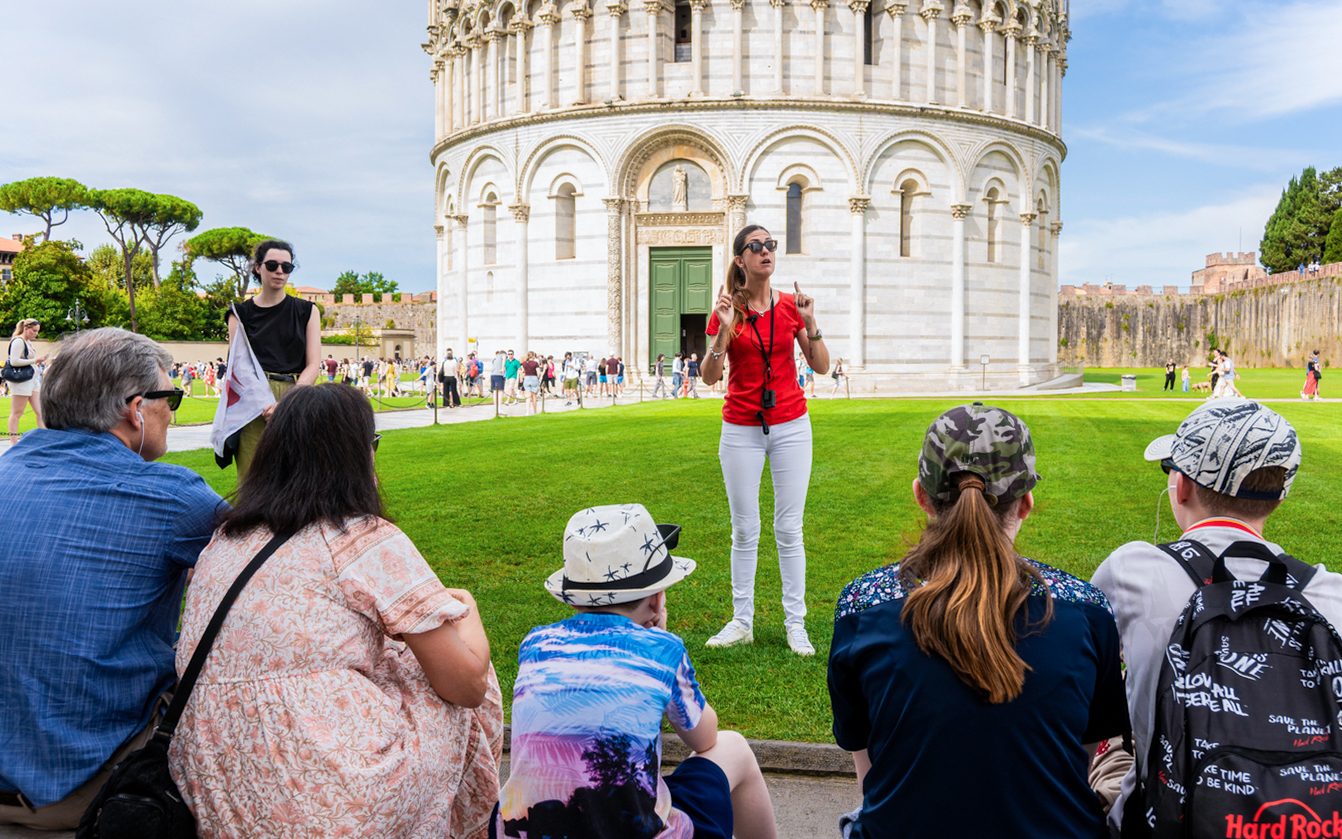
Can you visit Battistero di San Giovanni of Pisa with a guided tour?
Guided tours are available for the Battistero di San Giovanni and often include access to other monuments in Piazza dei Miracoli. These tours typically provide historical context about the baptistery's construction, architectural features, and the famous acoustic demonstrations that occur every half hour.
Are tours worth it?
Guided tours offer valuable insights into the baptistery's Romanesque-Gothic architecture and help visitors understand the significance of Nicola Pisano's pulpit, considered a precursor to Renaissance art. Tour guides explain the building's unique acoustic properties and the symbolism behind its circular design, which references the Holy Sepulchre of Jerusalem. They also point out details like the biblical scenes on the eastern door and the blend of styles from different construction phases spanning 1152 to 1363.
For visitors who prefer flexibility, independent visits work well since the baptistery's staff performs acoustic demonstrations regularly. The building's relatively straightforward layout makes it easy to explore without a guide. However, tours can enhance the experience by providing context about the sculptural details, the work of artists like Giovanni Pisano, and the building's relationship to the surrounding cathedral complex.
Are there any combo tickets that include Battistero di San Giovanni of Pisa and other attractions?
Visitors to the Battistero di San Giovanni can purchase combination tickets that provide access to multiple monuments in Piazza dei Miracoli. The Opera della Primaziale Pisana manages ticketing for all the major sites in the square.
Several ticket options bundle the Baptistery with other monuments. The most common combinations include the Cathedral, Leaning Tower, Camposanto, Opera del Duomo Museum, and Sinopie Museum in various groupings.
Typical combo ticket configurations include:
- Baptistery + Cathedral + one other monument
- Baptistery + Camposanto + Sinopie Museum
- Baptistery + all monuments except the Leaning Tower
- Full access pass including the Leaning Tower (most comprehensive option)
These combination tickets offer better value than purchasing individual entries. Visitors can choose packages based on how many sites they want to explore and their available time.
The tickets typically include priority entrance benefits, which help reduce waiting times during busy periods. Some packages come with audio guides that provide information about the architectural and historical significance of each monument.
Travelers should note that the Leaning Tower requires a separate timed entry slot, even when included in combination tickets. This ensures controlled access to the tower for safety reasons.
Tickets can be purchased online in advance or at the ticket offices in Piazza dei Miracoli. Advance booking is recommended during peak tourist seasons from June through August, especially after the introduction of extended evening hours that run until 22:30.
How do you get to Battistero di San Giovanni of Pisa?
The Battistero di San Giovanni is located in Piazza del Duomo, also known as Piazza dei Miracoli, in the heart of Pisa's historic center. Visitors can reach this UNESCO World Heritage Site through multiple transportation options.
By train and walking
Pisa's main train station, Pisa Centrale, is approximately 1.5 kilometers from the Baptistery. From the station, visitors can walk to Piazza dei Miracoli in about 20-25 minutes following Via Francesco Crispi and Via Santa Maria. Alternatively, the LAM Rossa bus line connects the station to the piazza in just a few minutes.
By air
Pisa International Airport (Galileo Galilei) sits only 2 kilometers from the city center. Travelers can take the PisaMover automated shuttle to Pisa Centrale station, then continue by foot or bus to the Baptistery. Taxis and ride-sharing services are also available directly from the airport terminal.
By bus
Several bus lines serve the area around Piazza dei Miracoli. The LAM Rossa line is particularly convenient for tourists, as it runs frequently between the train station and the monumental square.
By car
Drivers should note that Piazza dei Miracoli is located within a limited traffic zone. Several paid parking lots are available near the square, including Parcheggio Pietrasantina and Parcheggio Via Cammeo. These parking facilities are within a short walking distance of the Baptistery.
The Baptistery stands directly in front of the western facade of the Cathedral, making it easy to spot once visitors arrive at Piazza dei Miracoli.
What are the opening hours of Battistero di San Giovanni of Pisa?
The Battistero di San Giovanni in Pisa operates on a seasonal schedule that varies throughout the year. Visitors should plan their trips according to these changing hours to ensure they can access this architectural landmark.
Opening hours by season:
| Period | Hours |
|---|---|
| November to February | 10:00 - 16:30 |
| March to October | 09:00 - 18:30 |
| April to September | 08:00 - 20:00 |
The baptistery follows extended hours during the busier spring and summer months when tourism peaks. April through September offers the longest visiting window, with the building opening at 8:00 AM and remaining accessible until 8:00 PM.
During the winter months of November through February, the baptistery maintains reduced hours. The building opens later at 10:00 AM and closes earlier at 4:30 PM.
Visitors should note that the baptistery remains closed on January 1st and December 25th. The monument is located at Piazza del Duomo in Pisa and can be reached via bus lines 3 and A.
The entrance fee is €5, which grants access to both the ground level and the second floor. Staff members at the entrance can provide directions to the upper level, which offers views of both the baptistery's interior and the Duomo's facade.
Is Battistero di San Giovanni of Pisa wheelchair friendly?
The Battistero di San Giovanni presents significant accessibility challenges for wheelchair users. The building dates back to 1152 and was constructed long before modern accessibility standards existed.
Main accessibility limitations:
- No elevator or lift access to upper levels
- Spiral staircases are the only way to reach the women's gallery
- Uneven historic flooring throughout the interior
- Narrow doorways in certain areas
- Steps at various entrance points
The ground floor is partially accessible for visitors with mobility limitations. Wheelchair users can enter the baptistery and view the main floor, which includes the impressive octagonal baptismal font and some architectural features. However, they cannot access the upper gallery where visitors typically get panoramic views of the geometric floor patterns.
The Piazza dei Miracoli itself has relatively flat surfaces, making it easier to navigate the exterior areas around the baptistery. Visitors should be aware that the historic cobblestone paving in some sections may pose difficulties for wheelchair navigation.
Those planning to visit should contact the Opera della Primaziale Pisana in advance to inquire about specific accessibility accommodations or assistance available on-site. Staff members are generally helpful and can provide information about the most accessible routes through the monument.
Visitors with mobility concerns might find the Cathedral and other monuments in the square equally challenging, as they share similar historic construction limitations. Planning ahead and setting realistic expectations will help ensure a more enjoyable visit to this World Heritage Site.
Which other attractions can be visited in Pisa?
Visitors to Pisa will find numerous attractions beyond the Battistero di San Giovanni that showcase the city's rich cultural heritage.
Piazza dei Miracoli highlights
The Pisa Cathedral stands adjacent to the baptistery, featuring magnificent Romanesque architecture with bronze doors and marble columns. Inside, travelers can admire ornate mosaics, stunning frescoes, and Giovanni Pisano's beautifully crafted pulpit.
The Leaning Tower of Pisa remains the square's most famous landmark, drawing visitors who want to witness its remarkable tilt firsthand. The Camposanto Monumentale, a monumental cemetery with impressive Gothic architecture, houses ancient Roman sarcophagi and medieval frescoes dating back to the 13th century.
Museums and cultural sites
The Museo dell'Opera del Duomo offers an extensive collection of sculptures, paintings, and artifacts that trace the evolution of religious art in Pisa. Palazzo Blu presents diverse art exhibitions ranging from traditional to contemporary works, with ever-changing displays that appeal to various artistic tastes.
Historic squares and districts
Knights' Square (Piazza dei Cavalieri) served as Pisa's political center during the Middle Ages. The square features the Palazzo della Carovana and showcases impressive Renaissance architecture. Surrounding the area, visitors will find charming cafes and restaurants serving authentic Tuscan cuisine.
The Botanical Garden and Museum provides a peaceful retreat for those interested in natural history. Pisa's historic center offers additional opportunities for exploration, with hidden religious sites and local neighborhoods that reveal the city's authentic character.
Travel tips
Visitors should purchase tickets in advance to avoid delays, particularly during religious ceremonies when access may be restricted. The Baptistery is located in Piazza del Duomo, also known as Piazza dei Miracoli, making it easy to combine with visits to the cathedral and Leaning Tower.
The building reaches approximately 55 meters in height, and climbing to the upper levels provides excellent views of the surrounding monuments. Travelers should wear comfortable shoes for navigating the stairs.
Acoustic demonstrations: Staff members regularly perform echo demonstrations inside the Baptistery to showcase its exceptional acoustics. These brief performances occur at scheduled intervals throughout the day and are worth timing a visit around.
Best visiting practices:
- Arrive early in the morning or late afternoon to avoid peak crowds
- Allow 30-45 minutes to explore the interior properly
- Dress modestly as this is an active religious site
- Photography is permitted but flash may be restricted
The Baptistery can be visited year-round, though summer months bring larger tourist groups. Combined tickets for multiple monuments in the square offer better value than purchasing individual entries.
Guided tours provide historical context about the construction that began in 1152 and continued until 1363. These tours explain the transition from Romanesque to Gothic architectural elements visible in the structure. Audio guides are available in multiple languages for independent visitors who prefer self-paced exploration.
Frequently Asked Questions
Visitors planning a trip to the Baptistery of San Giovanni often have questions about ticketing, timing, and what makes this monument so distinctive among Pisa's architectural treasures.
How do I buy tickets, and is a time slot required to enter?
Tickets for the Baptistery can be purchased online in advance or at the ticket office in Piazza dei Miracoli. Combination tickets are available that provide access to multiple monuments in the square, offering better value for visitors planning to see more than one site.
Time slots are not typically required for entry. However, purchasing tickets online can help visitors skip the queues during busy periods.
What are the opening hours, and when is the best time to visit to avoid crowds?
The Baptistery's opening hours vary by season, generally opening earlier and closing later during summer months. Winter hours are typically more limited, so visitors should check the current schedule before planning their visit.
Early morning visits, particularly right when the monument opens, tend to be quieter. Weekdays generally see fewer crowds than weekends, and the months of November through February experience lower tourist traffic overall.
What makes the acoustics inside so famous, and when can I hear the echo demonstration?
The Baptistery's exceptional acoustics result from its unique double-dome structure. The inner dome has a truncated cone shape while the outer dome forms a hemisphere, creating a natural reverberation system that functions like a musical instrument.
Staff members provide brief acoustic demonstrations approximately every 30 minutes throughout the day. During these demonstrations, they sing a few notes and allow the sound to echo naturally through the cylindrical space, showcasing the remarkable resonance that can last several seconds.
What can I see inside, and what are the must-not-miss details of the interior?
The interior features eight monolithic columns that rival the height of those in the Cathedral, alternating with four pillars. Nicola Pisano's pulpit from 1260 stands as the centerpiece, representing a pivotal work that marked the beginning of a renaissance in sculpture.
The octagonal baptismal font by Guido Bigarelli da Como occupies the central space. This large basin was designed for full immersion baptisms of both adults and children.
A matroneum (gallery level) accessible by a spiral staircase offers an elevated perspective of the intricate geometric floor patterns in the presbytery area. These pavements display Arabic-influenced designs that add to the building's visual complexity.
How does its architecture differ from the nearby cathedral and other monuments in the complex?
The Baptistery combines Romanesque and Gothic styles, reflecting its long construction period from 1152 to 1363. Diotisalvi designed the original Romanesque structure, while later architects Nicola and Giovanni Pisano introduced Gothic elements during the 13th century.
Like the Cathedral, the building features white marble striped with gray and is surrounded by arcades on columns. However, its cylindrical form and double-dome construction set it apart from the Cathedral's basilica layout.
The wall thickness at the base measures 2.63 meters, contributing to the structure's acoustic properties. The dome covering is divided between red tiles facing the sea and lead plates facing east.
Is it the largest baptistery in the world, and how does it compare in size to others?
The Baptistery of San Giovanni is recognized as the largest baptistery in the world. Its circumference measures 107.24 meters and it reaches a height of 54.86 meters.
These dimensions exceed those of other notable baptisteries, including Florence's Baptistery of San Giovanni, which is significantly smaller in both diameter and height. The Pisa Baptistery's scale reflects the city's wealth and ambition during its time as a powerful maritime republic.